
Tea reached Europe through Portugal before it reached anyone else. From 1557, Macau was Portugal's own gateway to China — a small trading post that, for over four centuries, was the crossing point between two worlds. Portuguese ships carried tea west along that route long before it was fashionable anywhere else on the continent.
When the Portuguese princess Catherine of Braganza sailed to London in 1662 to marry Charles II, she brought her tea-drinking habit with her — and is widely credited with setting the fashion that turned tea into a British institution.
A little over two centuries later, that same route closed a loop. In 1878, the Azorean island of São Miguel had tea bushes but no one who knew how to process the leaf. The Society for the Promotion of São Miguel Agriculture sent for two tea masters from Macau — Lau-a-Pan and Lau-a-Teng — who taught the techniques that, by 1883, had grown into Gorreana: Europe's first tea garden, and still one of only two tea estates on the continent today.
Meridiana takes its name from that same crossing — the line tea first traveled from East to West.
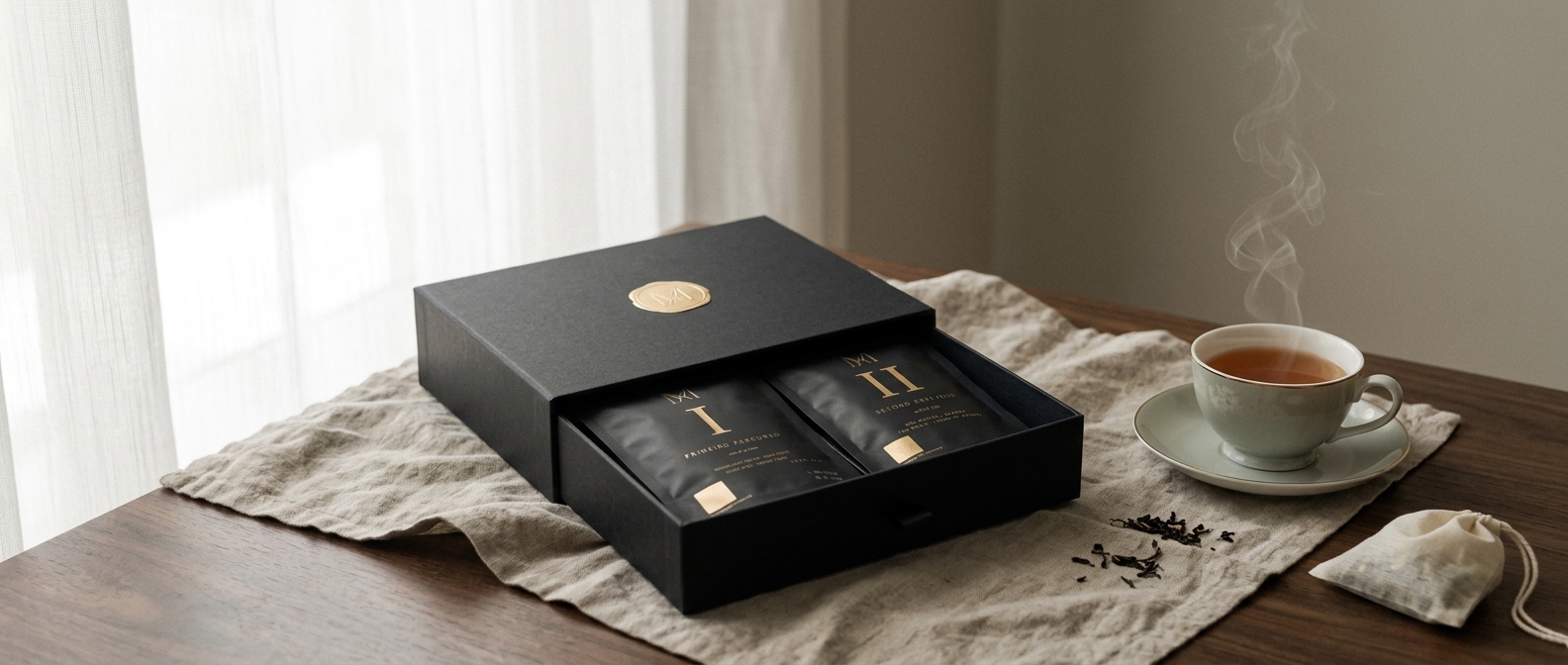
Box I, our first journey, begins in Yunnan: four teas from one plant, shaped only by human hands.
It’s the first chapter of Meridiana’s story, not the only one — more origins, more journeys, will follow.